Stellafane: A Century of Tradition, Friendship, and the Night Sky
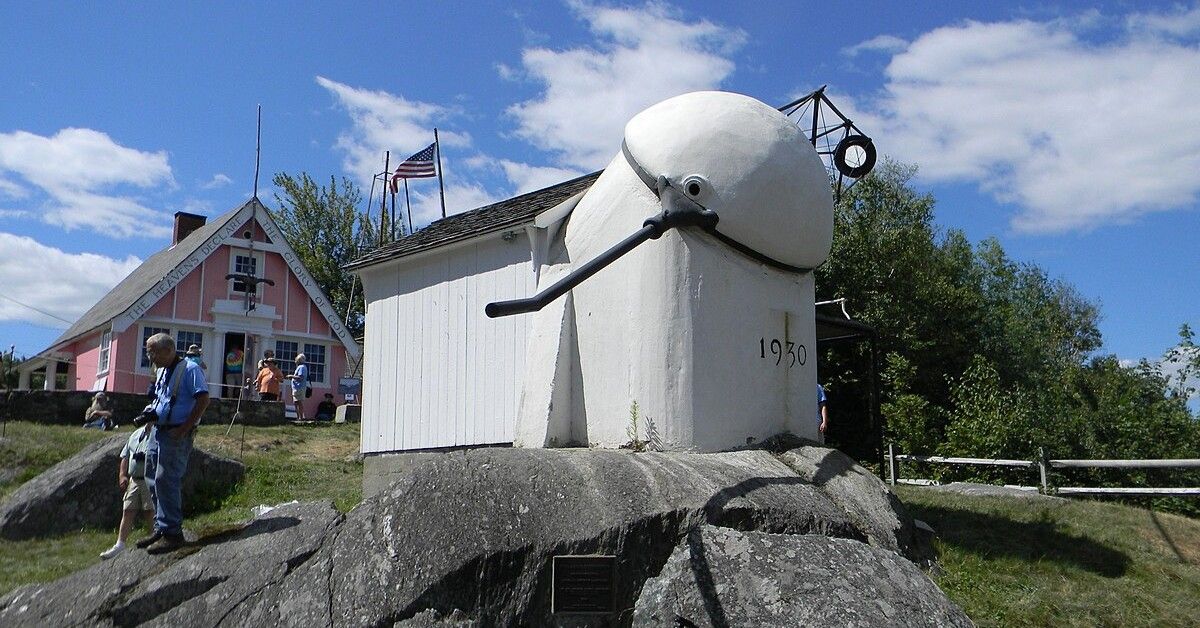
The Springfield Telescope Makers and nearly 1,000 attendees marked the 100th anniversary of the first Stellafane Convention this year. Not the 100th convention, but a century since that first gathering. I first attended the convention in 1981, and this year marked my 34th Stellafane. By now, it has become much more to me than simply a telescope-making convention.
For many people, Stellafane is a kind of annual marker. Some of us measure the year from one convention to the next. Phil Harrington once summed it up perfectly when he told me, “I live Stellafane to Stellafane.” For a lot of people, that really is the way it feels.
This past August, my wife and I drove up on Thursday morning and had an easy, leisurely trip. Once we got into Vermont, everything seemed to slow down. One of my favorite parts of the trip is turning onto Stellafane Road. I roll down the windows, turn off the air conditioning, and just breathe in the cool Vermont summer air as the road winds through the woods.
Stellafane itself is rugged. Once you leave Route 11, you are on dirt roads for much of the way. The convention site is spread across a hilltop, and as anyone who has spent much time in Vermont knows, almost nothing is level. Hundreds of people camp on the grounds, surrounded by telescopes, tents, observatories, and woods. There is running water on site, but it is not potable, and there are no flush toilets or showers. It is rugged, and that is part of its character.
When I reach the top of the hill and pass the gate, I always get the same feeling. My wife says my face changes when I get there. I am not sure I believe her, but I do know that I relax a bit more.
Just past the gate is the turn toward Stellafane proper, the original site with the famous Pink Clubhouse and the Porter Turret Telescope. The convention itself now extends to Stellafane East, about 100 yards farther down Jordan Road, where the McGregor Observatory, observing field, bunkhouse, food tent, amphitheater, pavilion, and camping areas are located.
From the entrance to the site, I drive slowly through the grounds, spotting familiar faces and noticing telescopes that immediately make me want to stop and take a closer look.
After being away from the convention for a couple of years, one of the best parts of this year was simply seeing people again. Some are club members. Some are old friends. Some are people I may only see once a year. And some have become more than friends.
There are many people who attend Stellafane whom I consider family, and I was happy to reconnect with many of them this year. Relationships like those are one of the reasons Stellafane has such a strong sense of family.
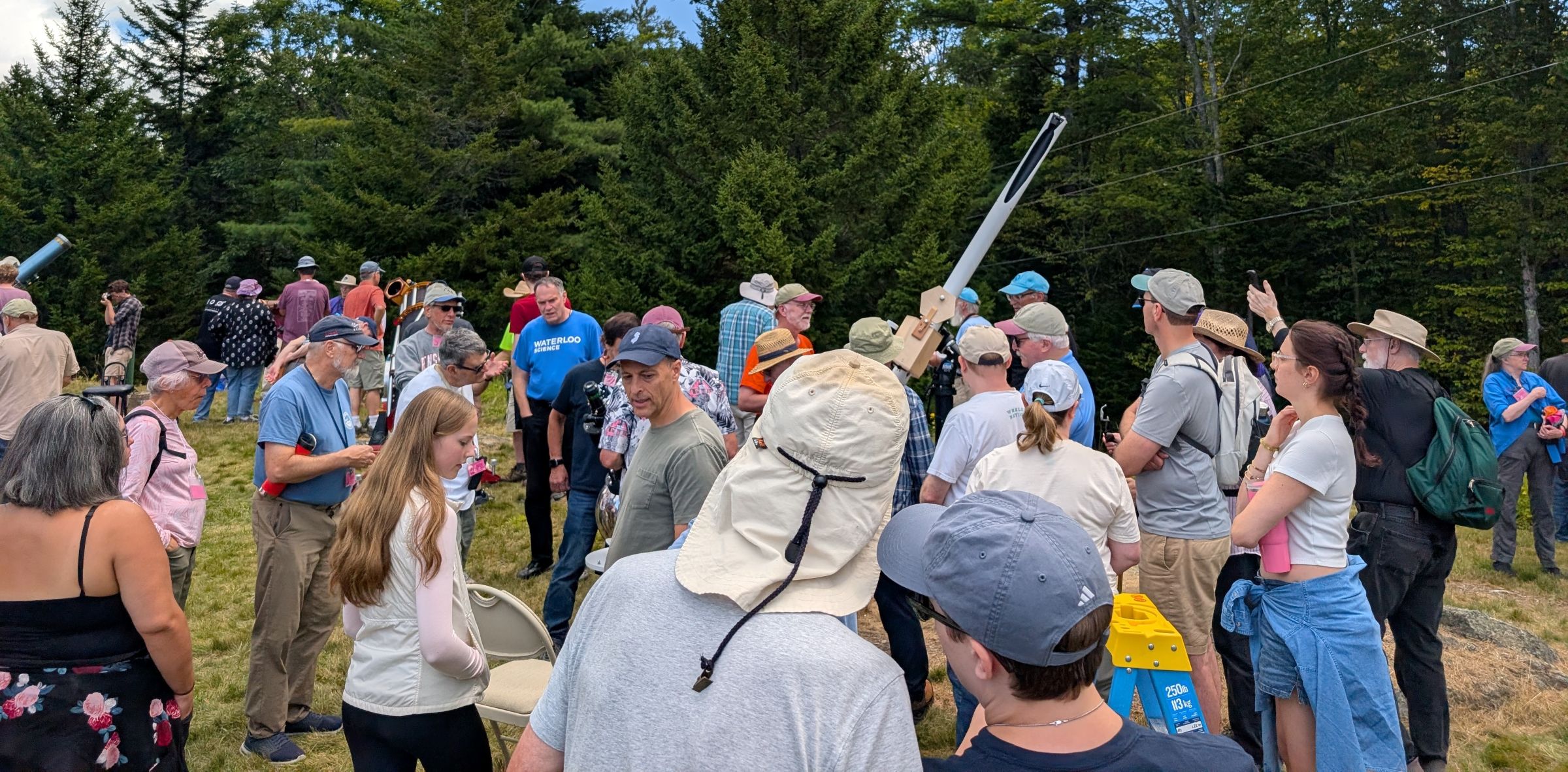
Years ago, Alan Tinker talked about that idea during one of his Shadowgrams. He said that if you go back far enough, we are all related anyway, and suggested that Stellafane was really a family gathering, not simply a convention. I have always loved that sentiment.
Of course, Stellafane is also about telescope making, and that tradition remains at the heart of the event.
The telescope-making competition is one of the things that makes Stellafane unique. People bring instruments they have designed and built themselves. Some are beautifully simple. Others are remarkably complex. Many builders even make their own optics.
While there were many impressive home-built telescopes on the hill, two in particular caught my attention.
One was Peter Michaud’s 5-inch f/9.8 folded refractor built into a spherical housing. In spirit, it reminded me a little of the old Edmund Scientific Astroscan, but this was a refractor with its optical path folded into a compact V-shaped arrangement. The objective pointed toward the sky, while the folded optical path placed the eyepiece toward the center of the spherical housing. It was clever, compact, and unlike anything you are likely to find in a telescope catalog.
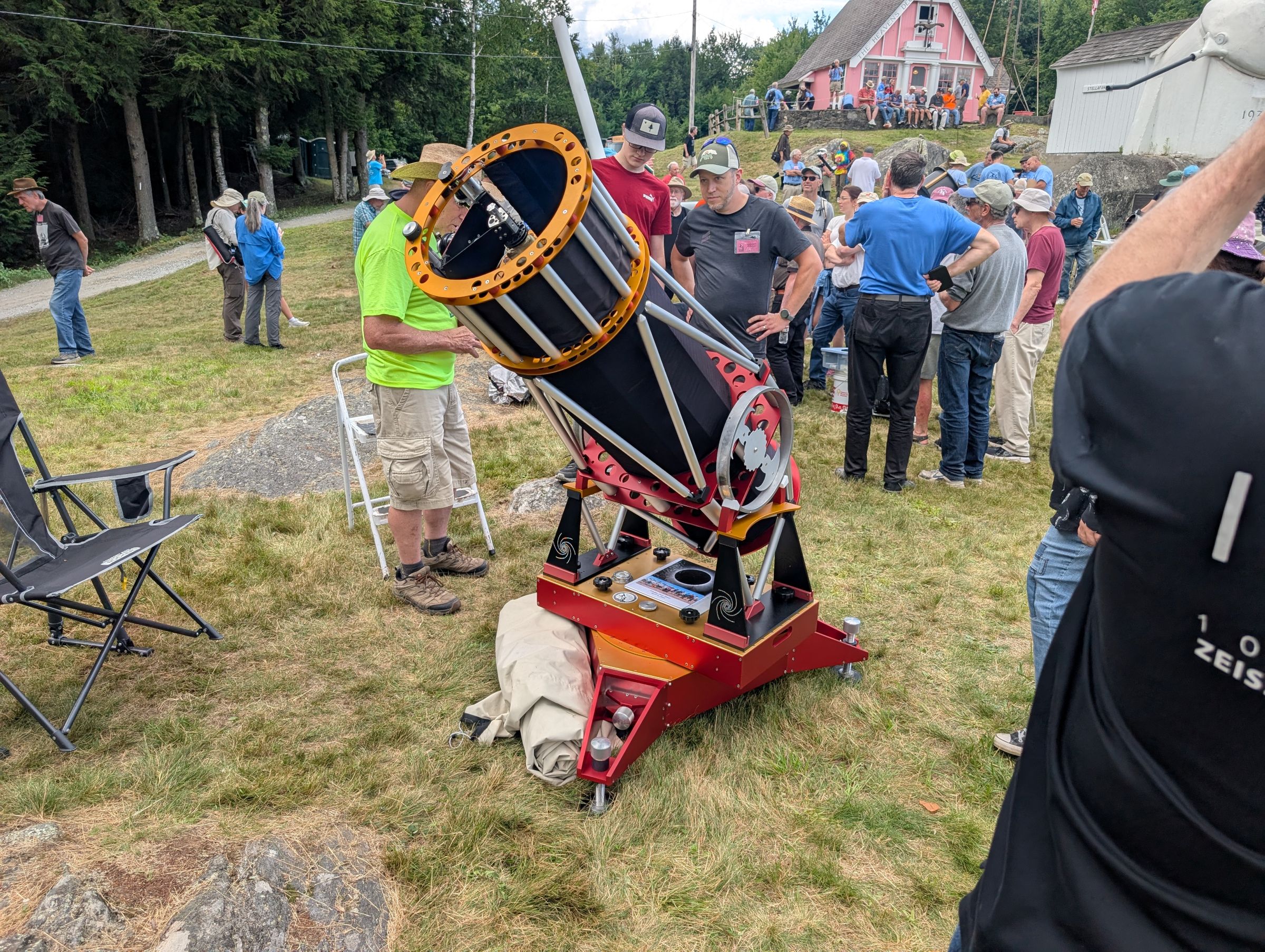
Another instrument that stood out was a folded reflector. What interested me most was the way a relatively long focal-length optical system had been folded into a much more compact package. It was a great example of the kind of practical ingenuity that shows up all over the Stellafane telescope field.
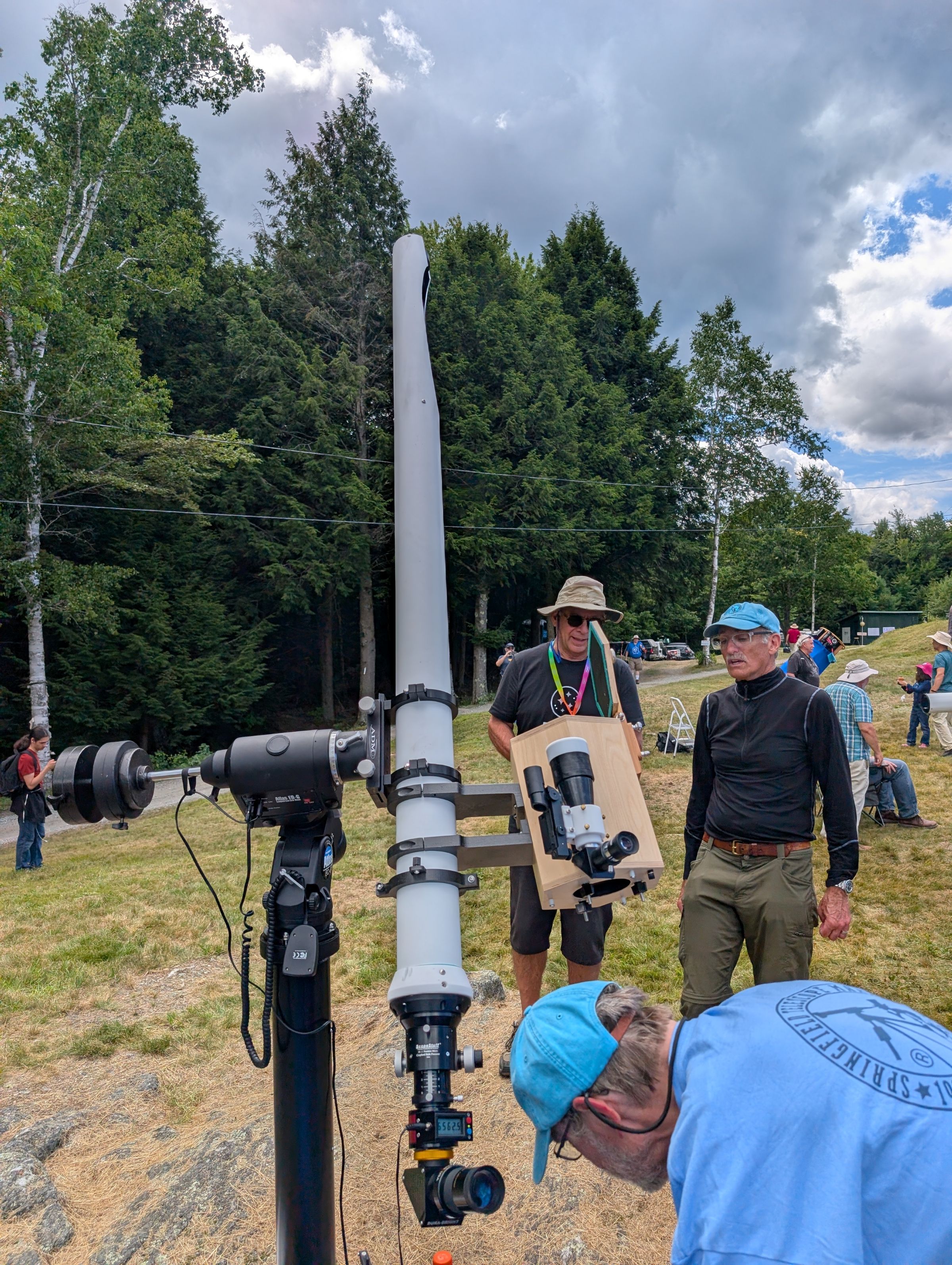
The mirror-grinding demonstrations are another important part of that tradition. Multiple stations are set up where people can learn how mirrors are ground, polished, and tested. Some bring their own mirrors to have them evaluated. Others simply sit down and try grinding or polishing for themselves. It is hands-on, approachable, and directly connected to the amateur telescope-making tradition that gave birth to Stellafane a century ago.
This year’s convention also included moments of remembrance.
Two people received special recognition: Al Nagler, founder of Tele Vue and a longtime club member, and Dennis Cassia, a fellow club member, friend, and former guest on the AstroGuy Podcast. Dennis passed away last year, and the convention included a video tribute to him put together by Joe Rao.
Dr. Kris Larson, during her Shadowgram presentation, devoted a substantial part of her remarks to Al Nagler before leading everyone in attendance in a candlelight vigil. Those moments were moving, and they served as a reminder that the history of Stellafane is not just the story of telescopes, buildings, and conventions. It is the story of people.
And then there was the sky.
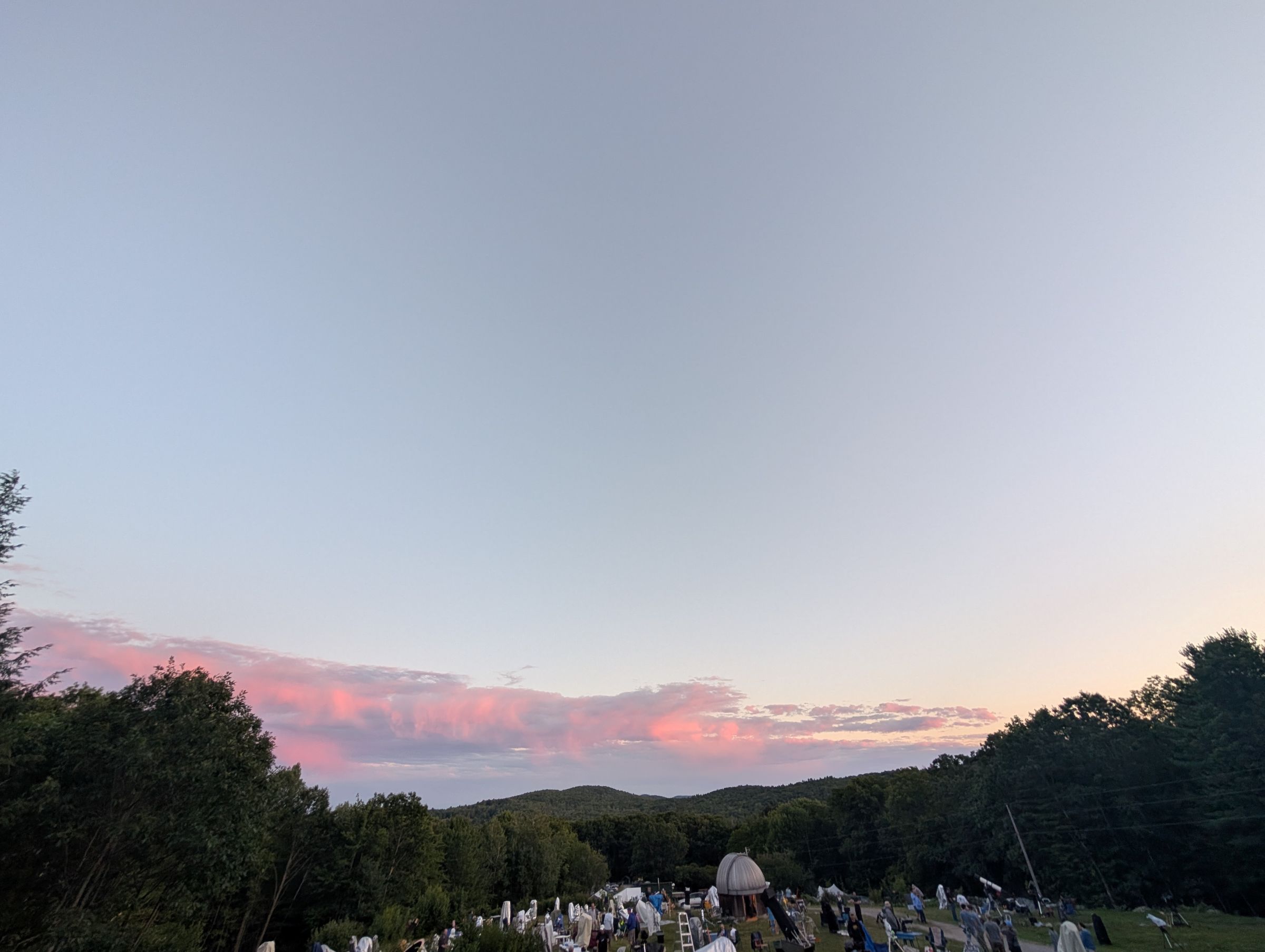
Thursday night was good for a while, but clouds moved in around 11 p.m., cutting the observing and imaging short. Friday night was spectacular, and Saturday night was good as well.
I had my Seestar S30 Pro with me and captured several Milky Way images that I am very happy with. Those images will always remind me of the weekend, but some of my favorite observing was much simpler. I spent a lot of time just sweeping the sky with binoculars.
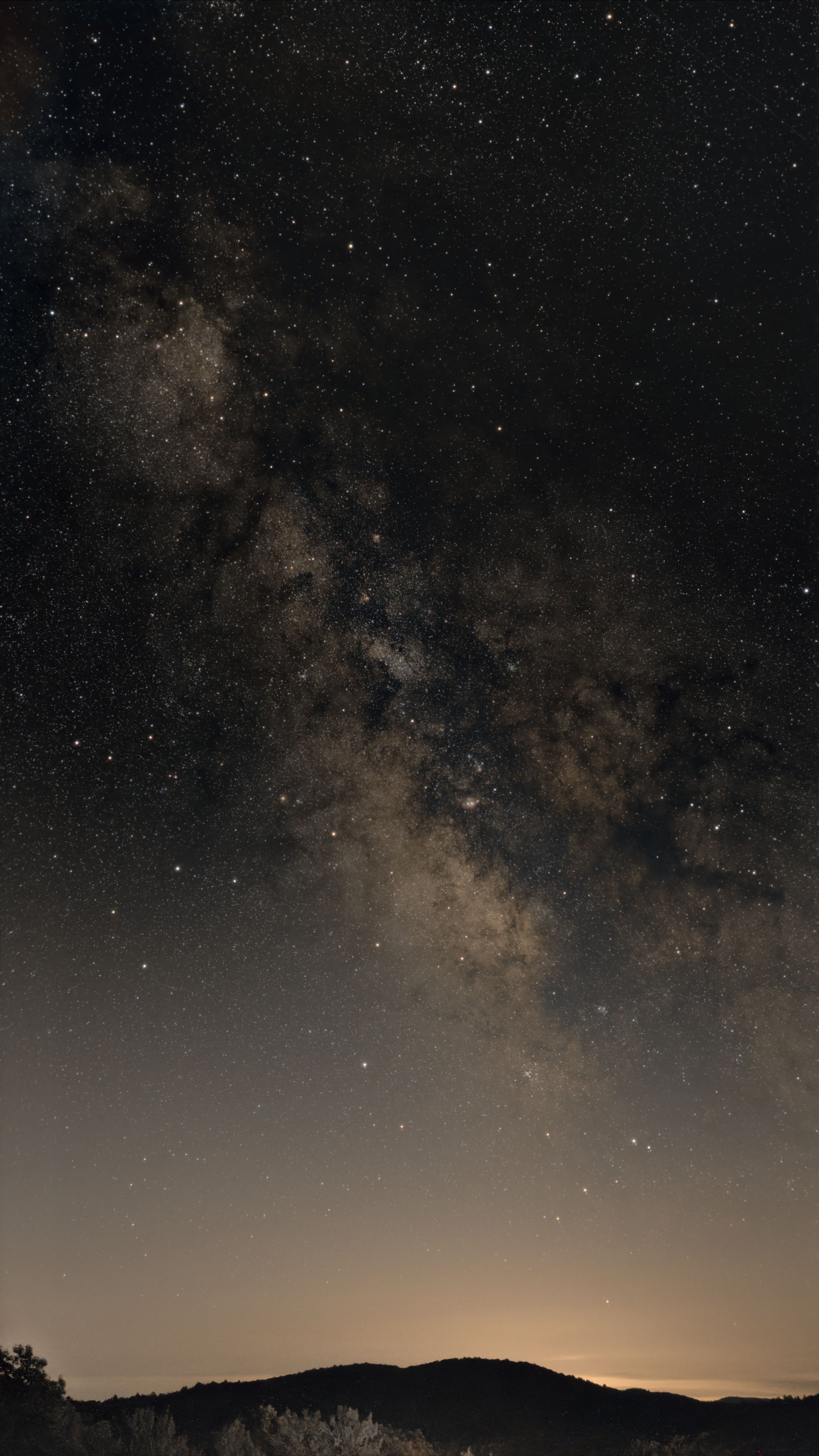
Under those dark Vermont skies, I picked out dozens of deep-sky objects. I also had the chance to look through several different telescopes around the field. Over the course of the night, I saw roughly 25 Perseid meteors and eventually lost count of the number of satellites crossing the sky.
Stellafane has a long-running joke attached to it because of its sometimes unpredictable weather. Some people call it “Stellarain.” This year, thankfully, the nickname did not fit. The days were comfortable, the nights were cool, and the skies gave us the kind of conditions everyone hopes for when they make the trip.
Attendance seemed a little lighter than usual this year. Many regular attendees had instead traveled to Iceland and Spain for the total solar eclipse just before the convention began. Even so, Stellafane remains an international gathering. Over the years, people have traveled from all over the world to attend, and this year was no exception.
That is part of what makes the place remarkable. Hundreds of people travel long distances to a remote hilltop in Vermont with dirt roads, uneven ground, limited facilities, and no guarantee of clear skies.
And they keep coming back.
They come for the telescopes. They come for the dark skies. They come to learn, to build, to observe, and to share ideas.
But just as importantly, they come for each other.
A hundred years after that first convention, that may be Stellafane’s greatest tradition of all.