What’s Up in the October 2026 Skies?
This is one of my favorite months to get outside under the night sky.
The nights are finally getting longer, temperatures are starting to cool down, and this month we have a particularly good mix of planets, observing events, and deep-sky targets.
The October episode of the AstroGuy Podcast will be out in just a few days. In the meantime, here are some of the nights I think are worth putting on your calendar and a few ideas for planning your observing.
The October 2026 AstroGuy Observing Guide is also available for download, with the Moon phase calendar, planetary information, observing notes, finder charts, and this month’s deep-sky targets.
October 2026 Night Sky Highlights
The planets are really the big story this month.
Saturn reaches opposition early in October, putting on a great showing all night. Mars passes directly through the Beehive Cluster, giving us both a beautiful view and a chance to actually see planetary motion over the course of a few hours. And on October 6, the Moon passes directly in front of Jupiter for observers across a large part of North America.
We also have asteroid Vesta at opposition, two meteor showers, a terrific lunar crater to explore, and a deep-sky tour through Cepheus.
There’s quite a bit going on, but you definitely don’t have to try to see everything.
Saturn at Opposition in October 2026
Saturn reaches opposition on October 4.
Around opposition, Saturn rises near sunset, remains visible for most of the night, and is near its brightest and largest for the year. That makes October an excellent time to put some magnification on it and spend some time at the eyepiece.
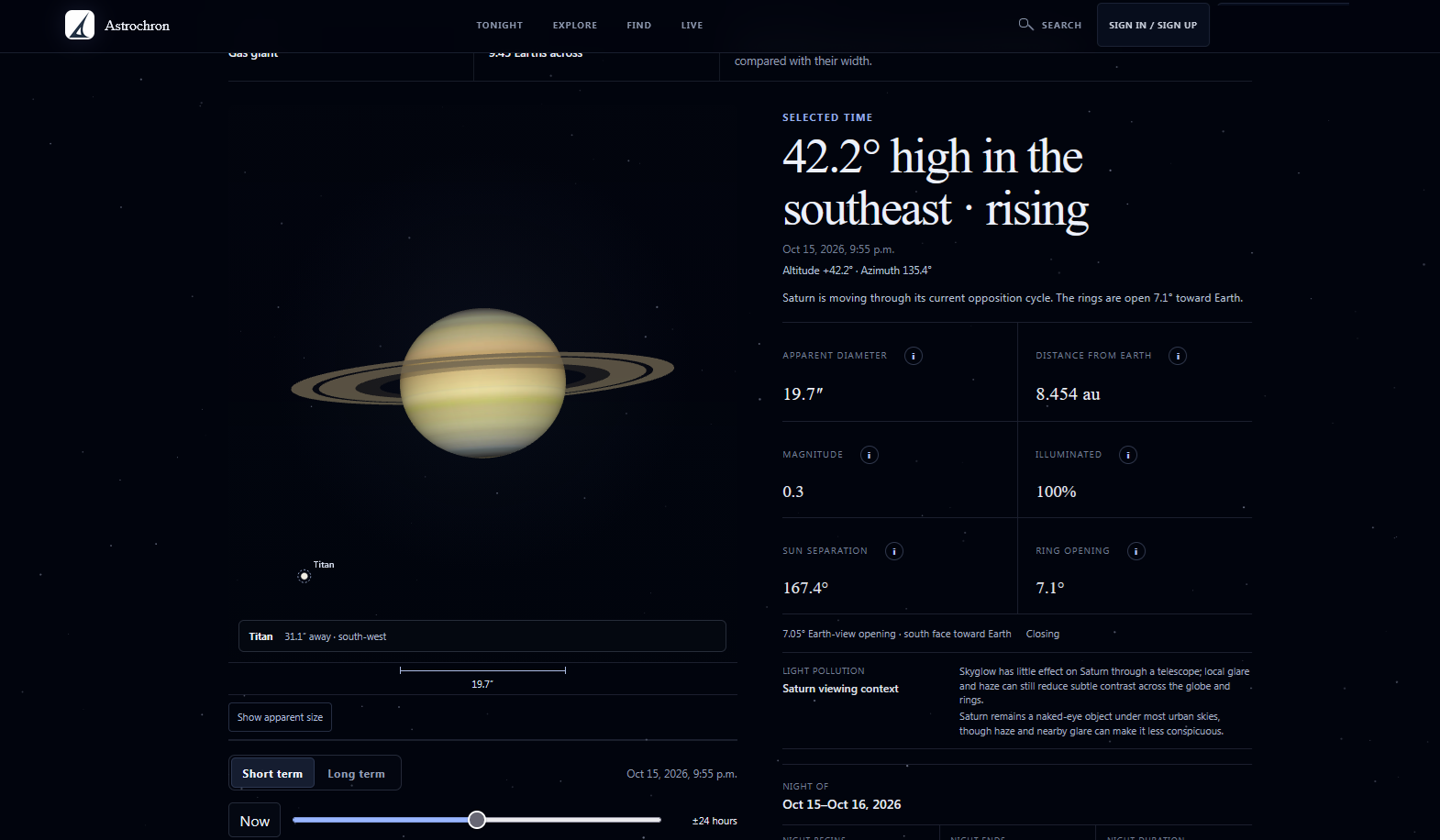
A small telescope will easily show the rings. With more aperture and steady seeing, look for some of Saturn’s brighter moons and see how much detail you can pick out on the planet itself.
I’ve looked at Saturn countless times over the years, and I still stop and spend time with it whenever it’s well placed. Around opposition, Saturn deserves more than a quick look. Boost the magnification, take your time, and see what the seeing conditions will give you.
Mars Passes Through the Beehive Cluster
Set an alarm for the morning of October 11.
Mars will be moving through the Beehive Cluster, M44, in Cancer. At closest approach, Mars passes less than five arcminutes from the center of the cluster. Binoculars should give you a beautiful wide-field view, while a telescope at low power will bring Mars and the surrounding cluster stars together in the same field.
But there’s a fun bonus to this event.
Mars moves enough during the morning that you can actually detect its changing position against the background stars. Over about three hours, Mars will move roughly 6½ arcminutes. Photograph it a few times during the morning, or make a simple sketch of its position relative to some nearby stars, and you should be able to see the difference.
We talk about the planets “wandering” through the sky, but most of the time that motion is something we notice from night to night.
Here, you get a chance to see it happening in just a few hours.
The Moon Occults Jupiter on October 6
On October 6, the Moon will occult Jupiter.
For observers along the occultation path, Jupiter will disappear behind the Moon and later emerge from the opposite side. The event is visible across much of the United States and Canada, although observers in the western United States and western Canada will miss the actual occultation. But even if you’re outside the path, the Moon and Jupiter will still form an extremely close pairing.
If you’ve never seen the Moon occult a bright planet, it’s worth watching. Jupiter is sitting there beside the Moon and then, surprisingly quickly, it’s gone.
Binoculars are enough, although a telescope will make the disappearance and reappearance even more interesting.
How to Find Asteroid Vesta in October 2026
October also gives us a good opportunity to add something different to the observing list.
Asteroid 4 Vesta reaches opposition on October 13 and will be around magnitude 6.5, putting it within reach of binoculars from a suburban location.
Don’t expect it to look like an asteroid from a science-fiction movie. Vesta will simply look like another point of light.
What makes it interesting is coming back the next night.
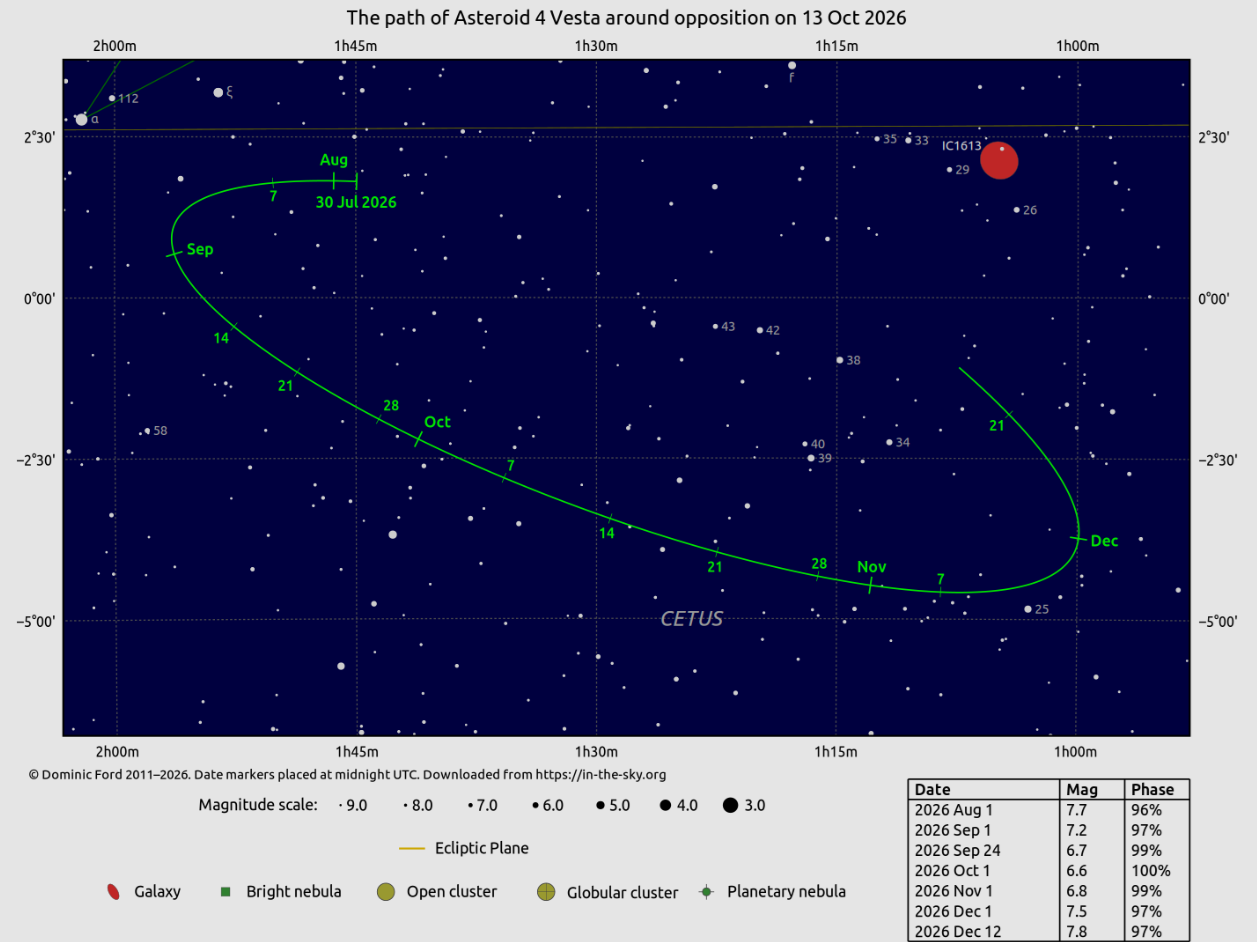
Use the finder chart in the October Observing Guide to identify Vesta among the surrounding stars. Then return on another evening and compare its position. The point of light that’s moved is Vesta.
It’s a simple project, but I think it’s a fun one.
October Meteor Showers: Draconids and Orionids
October has two meteor showers worth mentioning, but expectations matter.
The Draconids peak around October 8 and are unusual because they’re best observed in the evening rather than in the hours before dawn. They’re normally a modest shower, but the Moon will interfere very little this year, so it’s worth keeping an eye on the sky if you’re already outside.
The Orionids peak later in the month, around October 21. They’re produced by debris from Halley’s Comet and can produce about 20 meteors per hour under ideal conditions.
Unfortunately for all of us, this is not a good year for the Orionids. A bright waxing gibbous Moon will be in the sky and will wash out all but the brightest meteors.
I wouldn’t make a special trip to a dark-sky site for the Orionids this year, but if you’re outside anyway, keep looking up.
Observing Eratosthenes Near First Quarter
This month’s Lunar Feature of the Month is Eratosthenes.
It sits near the eastern edge of Mare Imbrium and is about 58 kilometers across, with terraced walls and a prominent group of central peaks.
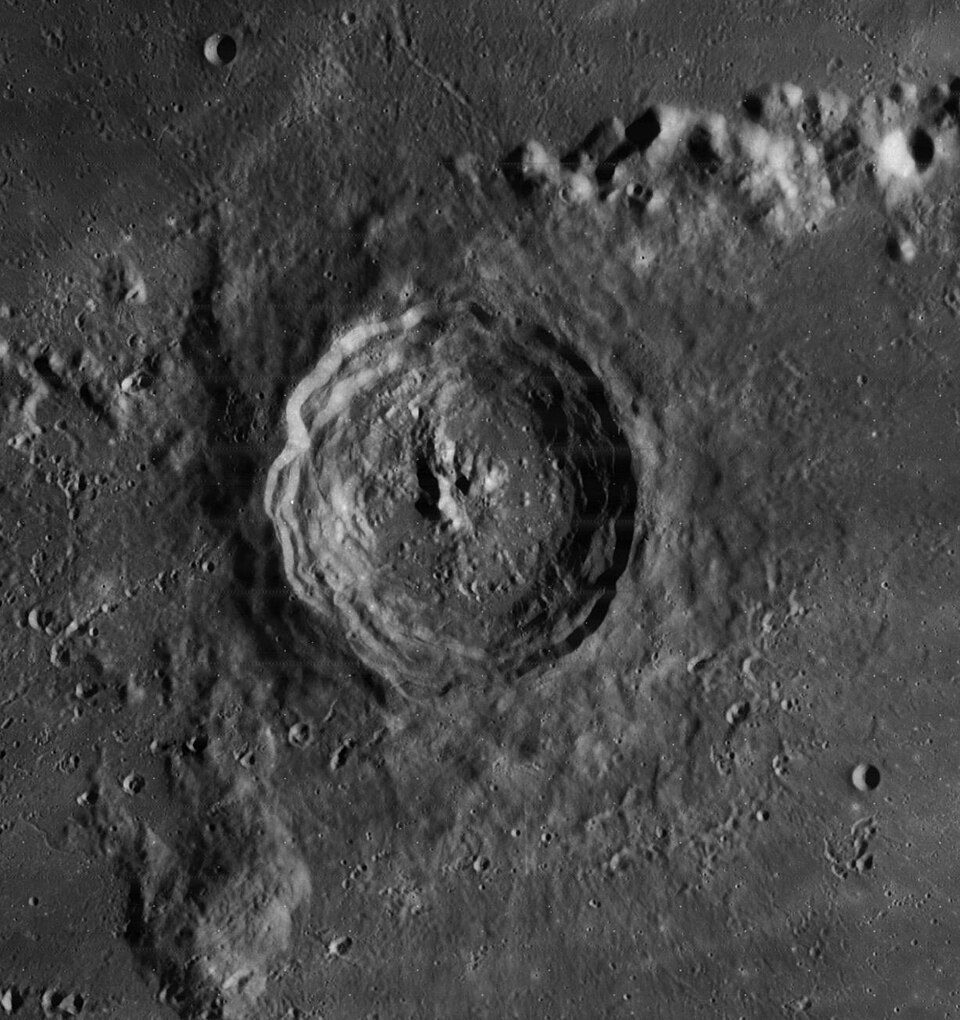
Around First Quarter, when the terminator is nearby, the low Sun angle throws long shadows across the crater and really brings out the relief.
This is also a good crater to observe more than once.
Look at it one night, then come back the next. As the Sun rises higher over that part of the Moon, the shadows shorten and the appearance of the crater changes dramatically.
There’s also a fascinating story behind the man Eratosthenes was named for. More than two thousand years ago, using geometry, shadows, and careful observation, he came remarkably close to measuring the circumference of the Earth accurately.
We’ll spend a little time on that in the episode.
Deep-Sky Objects in Cepheus
For October’s deep-sky tour, we’re heading to Cepheus the King.
Cepheus is circumpolar for many northern observers, so it never completely sets, and in October it’s conveniently placed in the evening sky.
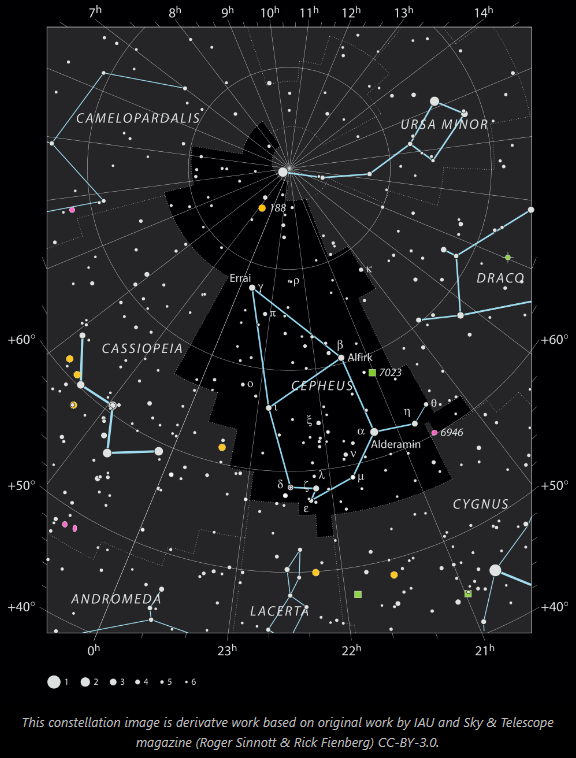
There’s a nice mix of targets in this month’s tour, including nebulae, multiple stars, the famous variable star Delta Cephei, and an old open cluster.
Some are easy. A few will take darker skies, more aperture, or a little patience.
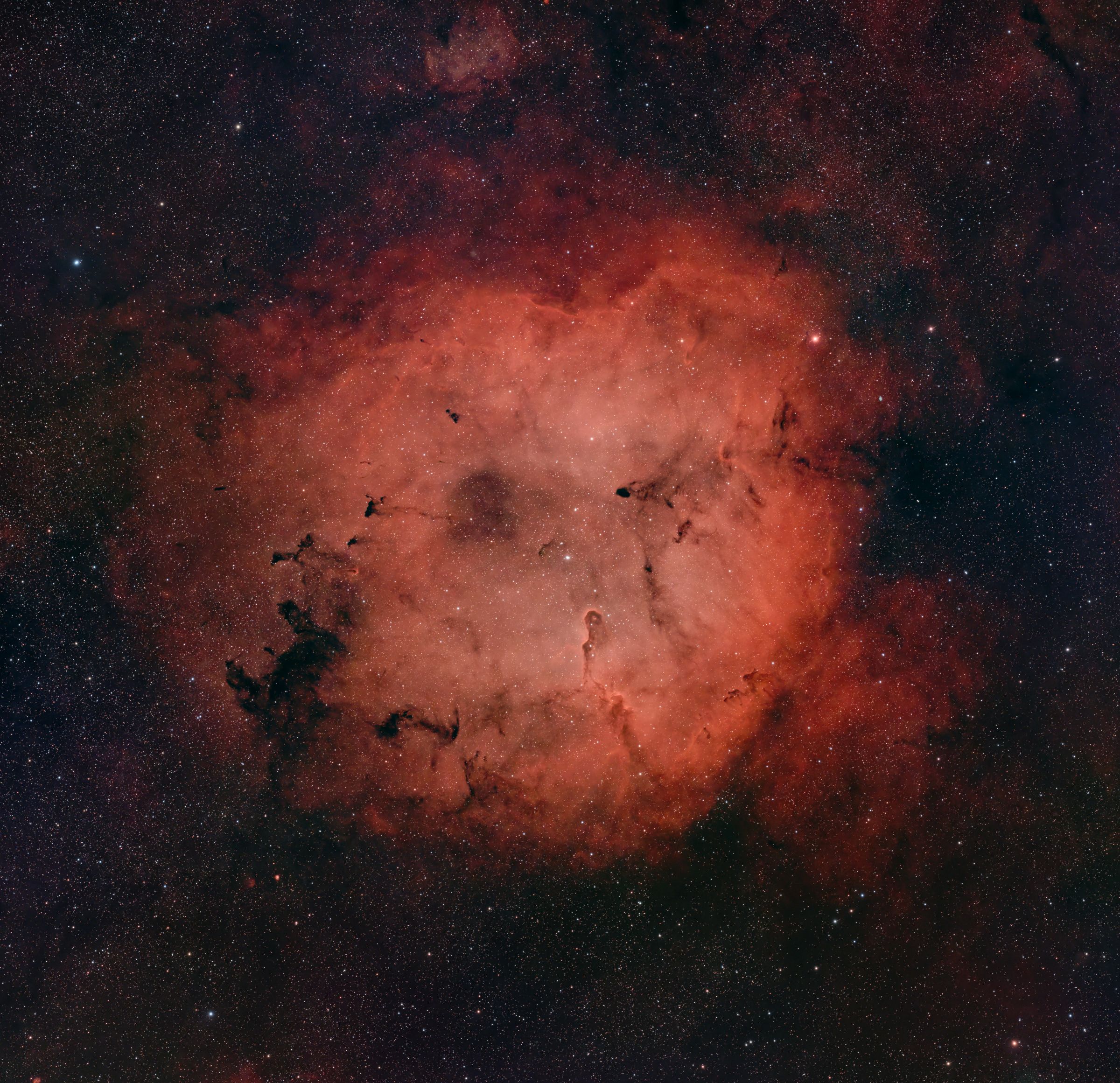
I’ll go through all of them in the episode.
Best October 2026 Observing Nights
If you don’t want to chase every event, I’d break the month up this way.
Early October: concentrate on Saturn, the Jupiter occultation on October 6, and the Draconids around October 8.
Around October 11–13: catch Mars in the Beehive Cluster, then use the Vesta finder chart and see if you can track the asteroid over several nights.
Around First Quarter: put the Moon in the telescope and spend some time with Eratosthenes.
When the Moon doesn’t interfere: head into Cepheus. Start with the easier stars and clusters, then try the fainter nebulosity from the darkest sky you have available. If you have a nebula filter, give it a try on the fainter nebulosity.
And if you miss something, don’t worry about it. There will always be another clear night and another target.
Watch What’s Up in the October 2026 Skies?
The full What’s Up in the October 2026 Skies? episode will be out in just a couple of days.
In the episode, we’ll take a closer look at the month’s planetary highlights, spend some time on Eratosthenes, and then head into Cepheus for the deep-sky tour.
The October 2026 AstroGuy Observing Guide is also available for download if you want the Moon calendar, planetary data, finder charts, and observing notes handy when you head outside.
There’s a lot going on this month, so hopefully you get a few clear nights to take advantage of it.
Until next time, may your skies be clear, and as always, Carpe Noctem, Seize the Night!