What’s Up in the December 2026 Skies?
December gives us several good reasons to bundle up and spend some time outside. The Moon won’t interfere with the Geminid meteor shower this year. Venus shines before dawn, and Cassiopeia offers a tour that works with binoculars and small telescopes.
Episode 125 of the AstroGuy Podcast, What’s Up in the December 2026 Skies?, publishes November 25. The free December Observing Guide is your companion for the month, with a daily Moon calendar, planetary notes, our lunar feature and the Cassiopeia tour.
When are December’s best nights for observing?
New Moon falls on December 8 in Eastern Standard Time. Put clear evenings in the first half of the month high on your list, especially if you want to search for faint nebulosity. As the Moon grows brighter toward first quarter on December 17, its light makes that faint nebulosity harder to see.
That doesn’t put an end to the Cassiopeia tour. Open clusters and double stars remain worthwhile targets in moonlight. Save the faintest objects for your darkest, most transparent nights, and use brighter evenings to explore individual stars and the Moon.
Depending on your time zone, Full Moon falls on December 23 or 24.
Which planets can you see in December 2026?
Saturn is well placed on December evenings. Look south after darkness falls, and observe it before it sinks toward the western horizon. On December 17, the Moon makes an attractive pairing with Saturn.
Jupiter and Mars favor the later hours. Both become easier to observe as they rise earlier through the month, but their best views will come after they have climbed well above the horizon. Before dawn on December 27 and 28, watch the Moon move through their part of the sky.
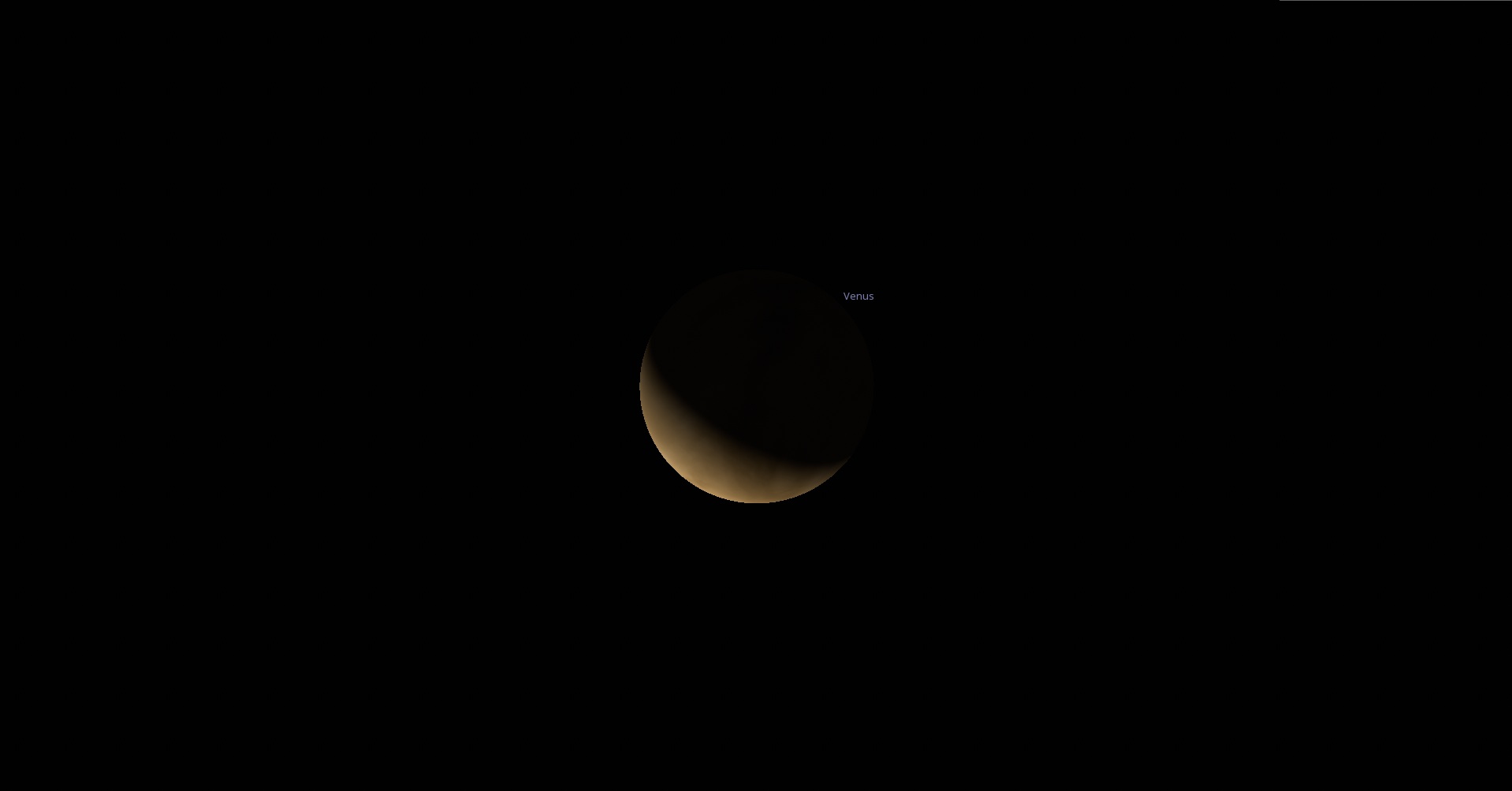
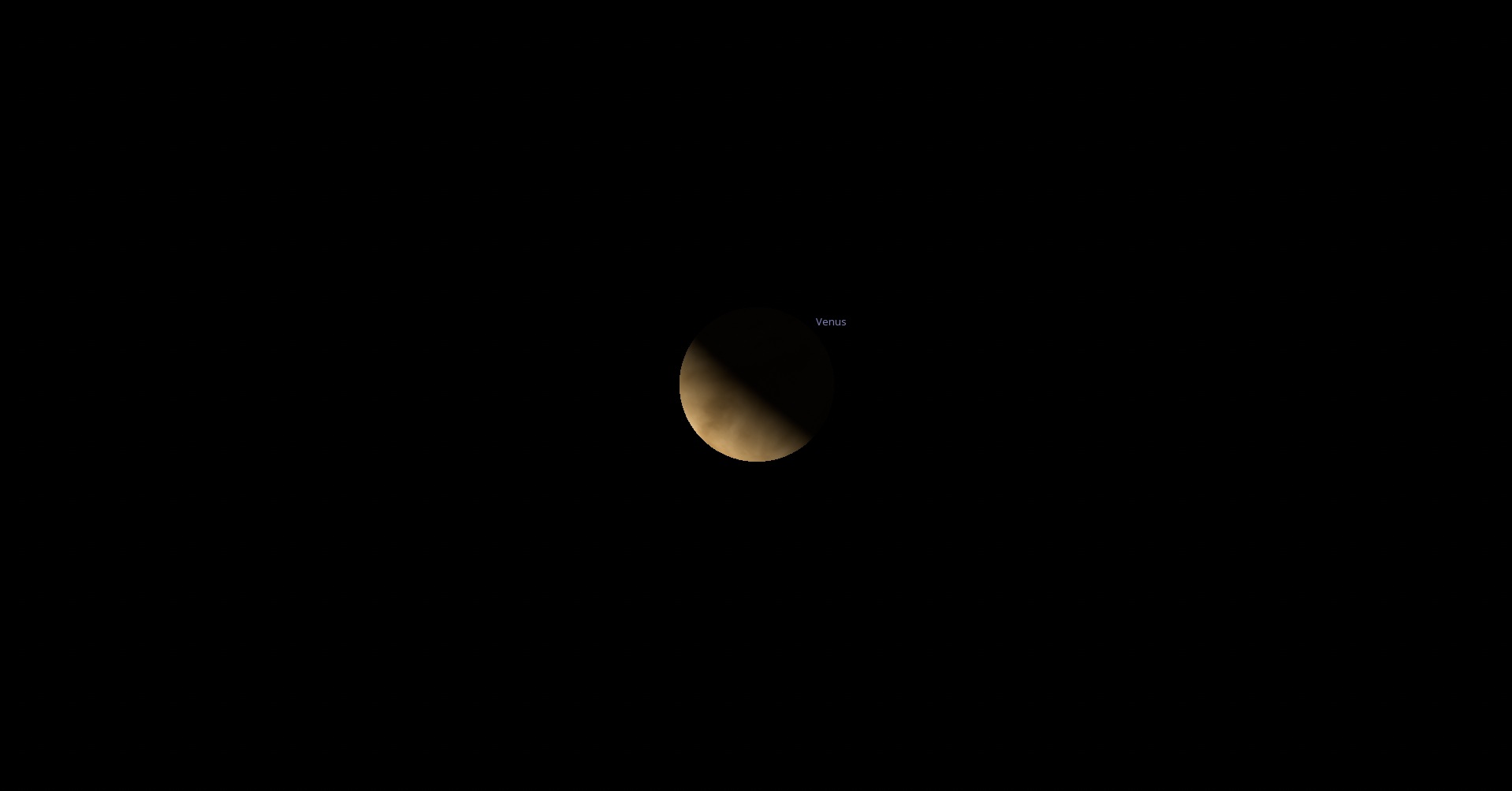
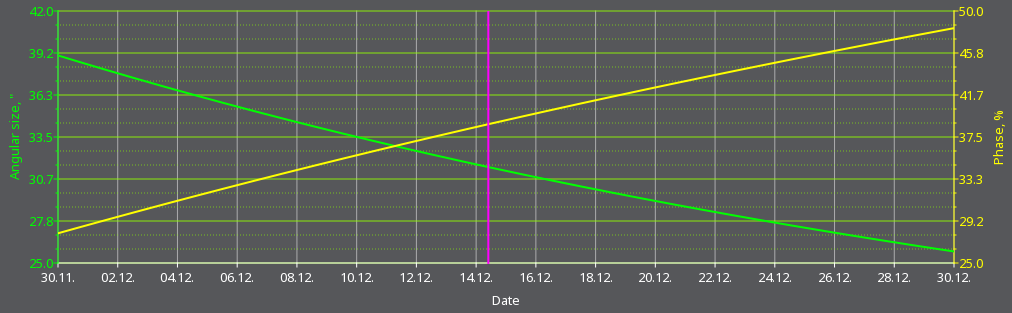
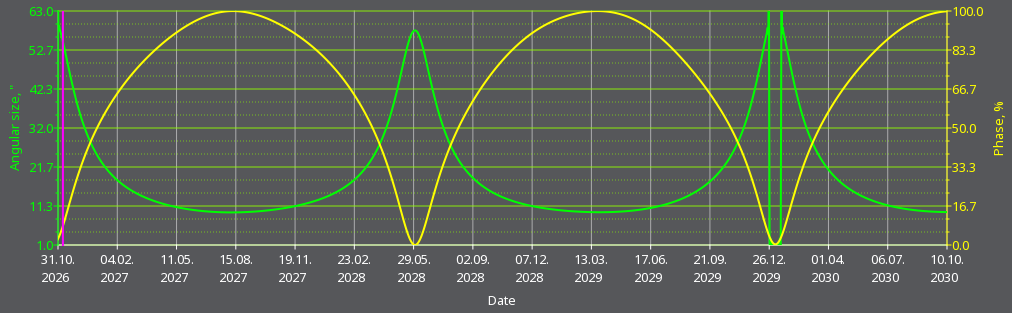
Venus is the standout morning attraction. Look southeast before sunrise for its brilliant light. Through a telescope, there’s a change worth following: its crescent becomes fuller during December while its apparent disk gets smaller. Venus is moving farther from Earth, so it looks smaller, while our changing viewing angle lets us see more of its sunlit side. The December graph shows this month’s change, while the longer graph shows how the pattern repeats over time. The waning crescent Moon joins the scene on December 5.
Mercury is a more difficult target. The first week of December offers the best opportunity, very low in the east-southeast before sunrise. You’ll need an unobstructed horizon. Binoculars will help, but be sure to finish your search before the Sun rises.
Distant Uranus and Neptune can also be spotted this month. Binoculars can reveal Uranus, while a telescope is the better choice for Neptune. Make sure to use the December finder charts when searching for these distant ice giants.
When should you watch the Geminid meteor shower?
For North American observers, plan on the night of December 13 into the morning of December 14. The waxing crescent Moon sets during the evening, leaving the later hours dark.
You can begin watching during the evening, but conditions improve as Gemini climbs higher. Around 2 a.m., the radiant, the point from which the meteors appear to come, is high in the sky. You don’t need to stare at Gemini; choose a comfortable position with a broad, open view.
The Geminids can produce bright meteors and occasional fireballs. The ZHR for the Geminids is 120. But that zenithal hourly rate describes ideal conditions, so expect fewer from suburban skies. Transparency, light pollution and the amount of sky you can see all affect your results.
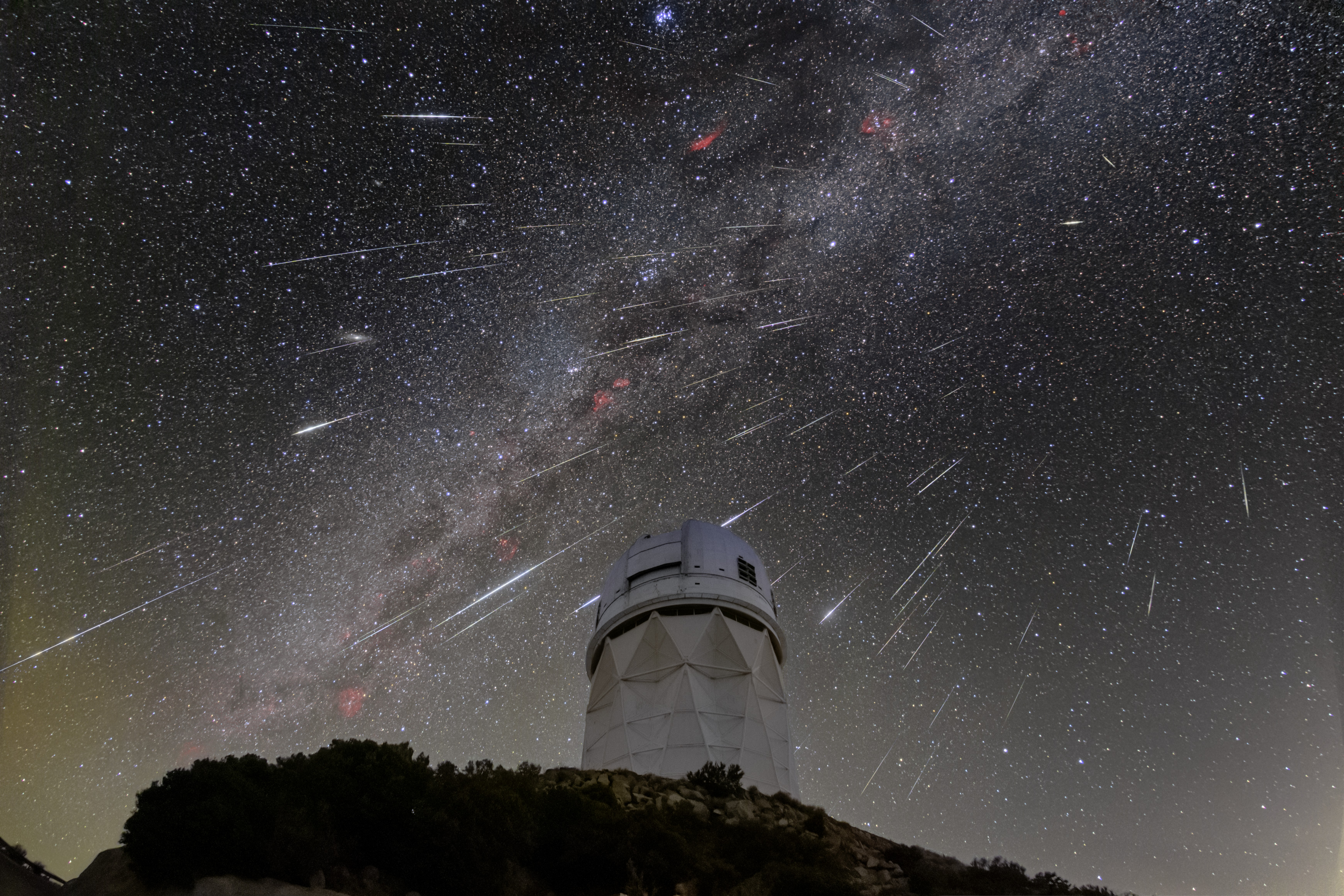
A telescope is not needed. Just dress warmly and bring a reclining chair or blanket. Give yourself enough time to settle in, and keep your phone screen off to preserve your night vision.
The Ursids peak around December 22, but the nearly full Moon makes them a poor bet this year.
What can you explore on the Moon this month?
Our Lunar Feature of the Month is Purbach, an ancient walled plain about 115 kilometers across in the southern lunar highlands.
If you followed September’s visit to Ptolemaeus, Alphonsus and Arzachel, you already have a starting point. Continue south, past Thebit, to find Purbach just north of Regiomontanus. Revisit September’s Lunar Feature of the Month at 7:53.
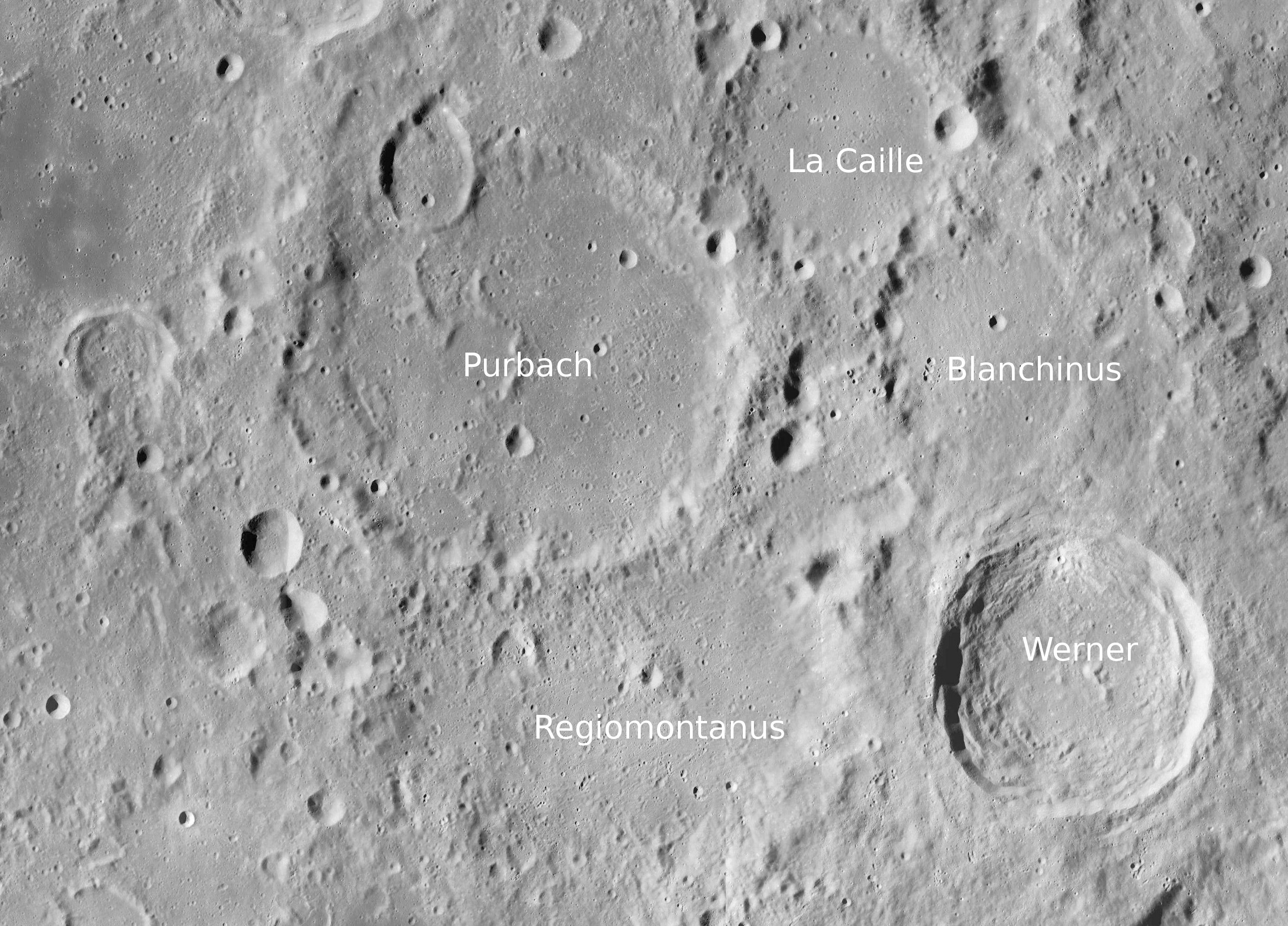
If weather permits, try the evenings of December 16 and 17, when low sunlight highlights the damaged walls and uneven floor. A night later, compare the view as more of the interior becomes illuminated. Early risers can try again before dawn on December 30 and 31, with the lighting approaching from the opposite direction.
Purbach also connects to the Lunar X. We’ll touch on that connection briefly.
What can you see in Cassiopeia?
Cassiopeia’s familiar W is the starting point for a region rich in open clusters and star fields.
This month’s tour visits M52, the contrasting double star Eta Cassiopeiae, NGC 457 with nearby NGC 436, the compact cluster M103, and the hidden gem: Stock 2, aka the Muscleman Cluster. Finally, we finish with the Heart and Soul Nebulae, making for a well rounded month of observing.
Set your expectations for the Heart and Soul Nebulae. Their stars are easily seen with a telescope, but the surrounding nebulosity is very difficult from suburban skies. Photographs reveal far more than you should expect at the eyepiece, but the area is still worth exploring.
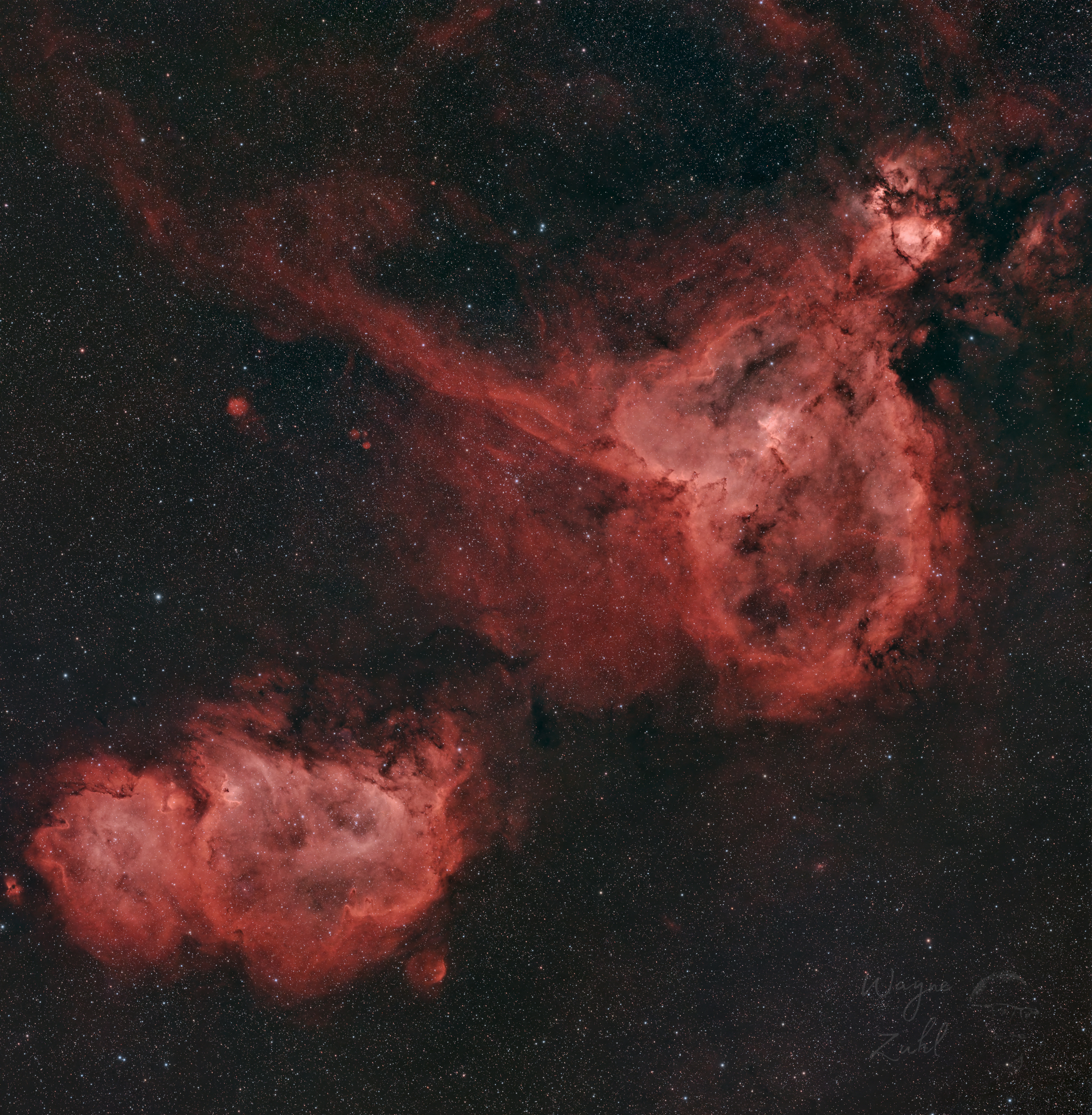
The episode and guide provide the finder charts and observing notes to help you plan your sessions.
Plan a night outside with AstroGuy
Download the free December 2026 Observing Guide, and find What’s Up in the December 2026 Skies? on the AstroGuy YouTube channel. Choose a few targets suited to your equipment and sky, then give yourself time to enjoy them.
If the show and guides help you get more out of the night sky, you can buy me a cup of coffee to show your support and help keep AstroGuy going.
I’d love to hear what you find. Share an observing report, sketch or image with the AstroGuy community, or contact me through the website.
Until next time, may your skies be clear, and as always, Carpe Noctem, Seize the Night!